January 29, 2026 · KAEVO
Creatine for women: the loading-week myth, and what to do instead
The bro-science loading protocol scares women off a supplement they'd benefit from. Here's the simpler routine, the bloating reality, and what the research actually shows for women specifically.
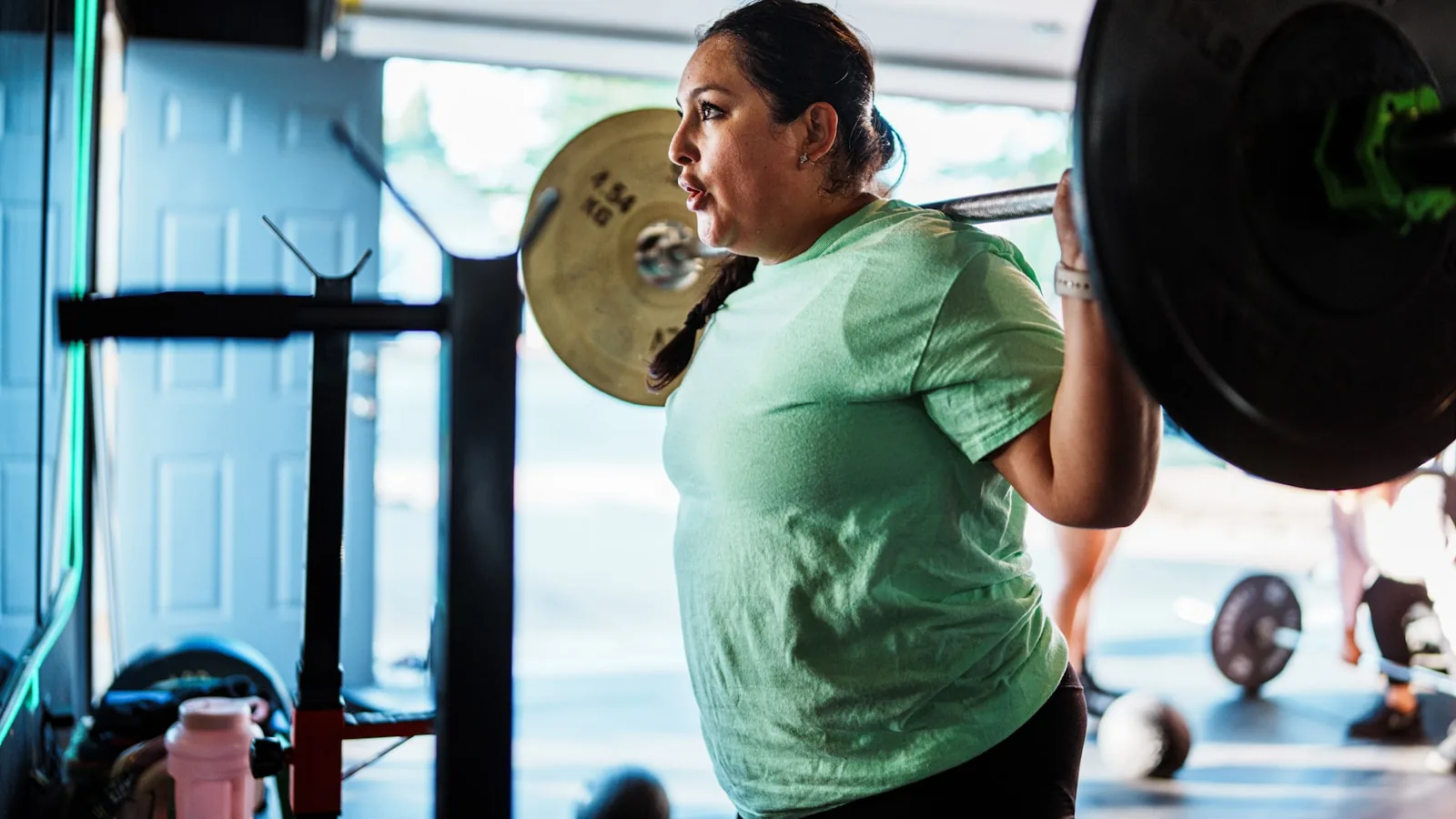
A lot of women have looked at creatine, considered taking it, and walked away because the protocol they read online started with five days of "loading." Twenty grams a day, four split doses, water retention, weight gain, the works. The article was written for a competitive male strength athlete. The reader was someone who wanted to feel stronger in everyday life and maybe protect their muscle and cognition through their forties and fifties. The protocol scared off the second person and that's a shame, because creatine is one of the few supplements with serious research behind it for exactly that second person.
This is the creatine-for-women problem. The supplement has more research than almost anything else in the legal performance space. The default protocol on the internet was designed for a different audience. The result is that women either take creatine in a way that produces all the inconvenient effects (bloating, weight gain) without much of the upside, or they don't take it at all.
The goal of this piece is to disconnect the supplement from the bodybuilding origin story, explain what creatine actually does for women specifically, and walk through the routine that does the job without the loading week.
Why creatine got coded male
Creatine monohydrate has been studied since the 1990s, mostly in male strength athletes, mostly with protocols designed for short-term gym performance. Loading was the standard protocol because it saturates muscle creatine stores in five to seven days instead of three to four weeks. For someone competing in two months, the extra three weeks of saturation matters. For someone taking creatine as a daily supplement to support cognition and recovery, it doesn't.
The cultural follow-on is that creatine became associated with weightlifting culture, which became associated with men, which meant the marketing, the dosing protocols, and the conversation about side effects all got built around that audience. Women hearing "creatine" still hear "loading week" and "20 pounds in a month" because that's what came up when they searched.
The actual research on creatine in women is good and growing. A 2021 review in Nutrients covered more than a dozen trials specifically looking at creatine in women across age groups. The findings: creatine supplementation in women supports lean muscle mass, exercise performance, and (in older women) bone-density-related markers. The effect sizes are smaller than in men in some metrics, larger in others. The cognitive evidence in women, especially around mood and sleep deprivation, is also reasonable. The dose used in most of these studies was 3 to 5 grams daily, no loading.
What creatine actually does
Creatine is a substrate your body uses to regenerate ATP, the molecule that powers short-burst muscular work. Your body makes some on its own; you get some from food, mostly red meat and fish. Supplementation tops up the muscle stores so the regeneration step is faster when demand spikes.
The visible effects show up in three places. Strength and power outputs in the gym (or in any context where you do short-burst work) improve modestly, usually 5 to 15 percent on lifts that depend on the ATP system. Muscle recovery between sessions improves, which means more consistent training over months. And the same energy system runs in the brain, which is why creatine has been studied for cognitive performance under sleep deprivation, mood support, and (preliminary) age-related cognitive maintenance.
For women specifically, the research suggests two extra angles worth knowing about. Creatine appears to have a small but consistent effect on mood markers, which has been more pronounced in women in some studies. And creatine plus resistance training in postmenopausal women has been associated with better lean-mass and bone-density-related outcomes than resistance training alone, which matters because both decline naturally with age and protecting them is a meaningful longevity-of-function lever.
The bloating reality, and what the research actually shows
This is where the loading-week myth does the most damage. The "creatine bloating" most women have heard about comes from one specific scenario: high-dose loading (20 grams a day for five days) saturates the muscles fast, and the muscles pull water in with the creatine. That water is intracellular, which means it's inside the muscle cells, not under the skin. It shows up on the scale. It does not show up as visible "puffiness" the way sodium-related water retention can.
At a 3 to 5 gram daily dose with no loading, the water retention is significantly more gradual, often imperceptible, and stays where you'd want it (in muscle cells) rather than anywhere visible. Most women on a maintenance-only protocol report no noticeable change in body composition outside the gym effects.
The classic side effect to actually watch for at any dose is mild GI upset in the first week, especially if you take a full 5 g dose on an empty stomach. Splitting the dose with food, or starting at 3 g for the first week, resolves it for almost everyone. People who report ongoing bloating or stomach discomfort on creatine are usually either still loading, or taking forms other than monohydrate that have a worse track record.
What "no loading" actually looks like
Skip the loading. Take 3 to 5 grams of creatine monohydrate daily. Take it with a meal that has some carbs or protein, which slightly improves absorption. Don't worry about timing relative to workouts; the supplement is about saturating a long-term pool, not about acute pre-workout effects.
The trade-off is that saturation takes about three to four weeks instead of five to seven days. The effects emerge over that window. Strength gains in the gym become noticeable around weeks three to six. Recovery improvements show up earlier, often within the first two weeks. The cognitive effects, where they exist, take longer and are more variable.
KAEVO Drive is creatine monohydrate at the daily-dose end of that range, formatted as a powder you can scoop into water or a smoothie. The dose is the no-loading dose. The form is the form the research has used for thirty years. There's no loading-week instruction on the label because there's no need for one.
Who should be careful
The standard caveats apply. People with kidney disease should not supplement creatine without a conversation with their doctor; the kidneys are how creatine and its byproducts clear, and adding load is a medical decision in that context. People on prescription medications affecting kidney function (some NSAIDs taken chronically, certain blood pressure drugs) should also check with a prescriber.
Pregnancy is an open question in the literature. Creatine is generally considered safe in moderate doses but the research base is thinner than the non-pregnant population, so most clinicians err toward "talk to your doctor first." If you fall into any of these categories, the conversation is one sentence; just have it before you start.
For everyone else, creatine has one of the strongest safety profiles of any well-studied supplement. The "kidney damage" claim that surfaces every few years is consistently not supported in healthy adults at supplemental doses across decades of trials. The myth persists; the research doesn't.
Creatine and the menstrual cycle
This is one of the more interesting recent research angles and one most general creatine guides don't cover. There's preliminary evidence that women's creatine metabolism varies across the menstrual cycle, with some studies suggesting that endogenous creatine availability shifts with hormonal phase. The implication is that supplementation may have proportionally larger effects in certain phases (the luteal phase, in particular) when natural creatine availability is lower.
Practically, this doesn't change the dosing recommendation. The daily 3 to 5 grams covers any phase-related variation. But it does support a case for not skipping doses, since the consistency-over-time effect is what carries through the cycle. Women on hormonal contraception may have slightly different baseline creatine kinetics than off-contraception women, but the effect on supplementation is small and the practical guidance stays the same.
For perimenopause and postmenopause, the case for creatine actually strengthens. The combination of lower estrogen, faster muscle-mass loss, and reduced bone density makes creatine plus resistance training one of the better-supported interventions in the literature for maintaining strength and function through this transition. Several recent reviews have specifically highlighted this population as one where creatine offers the largest practical benefit.
Creatine and cardio
Most creatine research is in strength contexts, which has led to the assumption that creatine doesn't help cardio. The evidence is more nuanced. Creatine's primary mechanism (ATP regeneration in the phosphocreatine system) is dominant in short-burst, high-intensity work, which is why the strongest effects show up in lifts and sprints. For steady-state aerobic work (long runs, easy cycling), the benefit is small.
The interesting middle is interval training, where short high-intensity bursts alternate with recovery periods. Creatine has been shown to improve repeat-sprint performance and reduce the drop-off across intervals, which translates to anyone doing HIIT, classes that mix circuits with cardio, or sport that involves repeated bursts (tennis, soccer, climbing). If your cardio is interval-shaped or sport-shaped rather than long steady-state, creatine helps.
The recovery benefit also applies to cardio training generally. Less soreness, faster turnover between sessions, more consistent training over months. The mechanism here is less directly performance-related and more about supporting the daily training load.
Putting the routine together
If you're starting creatine next week, the routine is three lines long. Pick a creatine monohydrate (not creatine HCL, not creatine ethyl ester, not whatever new form is being marketed this year). Take 3 to 5 grams daily, with a meal. Give it three to four weeks before evaluating.
If you'd rather not vet powders or read scoop sizes, KAEVO Drive is creatine monohydrate at the daily-dose end of the research range, no loading. The Daily Performance bundle pairs Drive with hydration and a complete daily multi for the full perform-pillar baseline; this is the version most women starting creatine would benefit from, since it covers the rest of the daily nutrient gaps that creatine alone won't. The bundle quiz sorts the sequence in about a minute if you want a recommended starting point.
The bigger frame: creatine is one of the few supplements where the research is strong, the side effect profile is gentle, and the cost is low. The barrier was never the science. It was the protocol most women read. The protocol is wrong for the use case. The supplement is fine.
Creatine plus collagen, briefly
A pairing that comes up a lot in women's wellness content is creatine and collagen. The two are unrelated mechanically (creatine is for muscle ATP, collagen is for connective tissue), but they share the daily-routine spot for many people because they're both unflavored powders that go into a morning drink. There's no negative interaction; if you're taking both, take both, no special timing required.
The case for collagen has thinner research than creatine but reasonable evidence for skin elasticity and joint comfort at 10 to 20 grams daily. It is not a substitute for protein; it's a specific amino-acid profile aimed at connective tissue. The two supplements answer different questions and can comfortably coexist in a daily routine.
For pure performance and recovery, creatine is the higher-leverage choice. For combined "feel-better" outcomes, both have a place.
A note on body composition expectations
Worth saying directly because the search intent often hides behind "women and creatine" questions. Creatine does not cause fat gain. The water moved into muscle cells is not visible weight in the way fat is, and at a 3 to 5 gram daily dose with no loading the increase is small (1 to 3 pounds, mostly stable, mostly inside muscle tissue). Most women on a maintenance protocol see negligible change in body composition outside the gym effects, which trend toward slightly more visible muscle definition over months as training improves.
The supplement also does nothing to "make you bulky." That's a separate concern that's about training volume and intensity, not creatine. The fear of bulk on creatine has the same source as the fear of bulk on lifting; both are about the visible effects of training, not the supplement.
The short version
Skip the loading week. Take 3 to 5 grams of creatine monohydrate daily, with a meal. Give it three to four weeks. Ignore the bodybuilding-coded marketing. The research on creatine in women is solid for muscle, bone, recovery, and (preliminary) cognition. The bloating concern is a loading-protocol artifact that goes away when you skip the loading. The routine is shorter than the article was. The boring answer is the right one.