May 1, 2026 · KAEVO
What to look for in a mushroom coffee (and what to avoid)
The mushroom coffee category has a serious ingredient honesty problem. Here's the one question that separates real formulas from expensive regular coffee, and how to read a label that tells the truth.
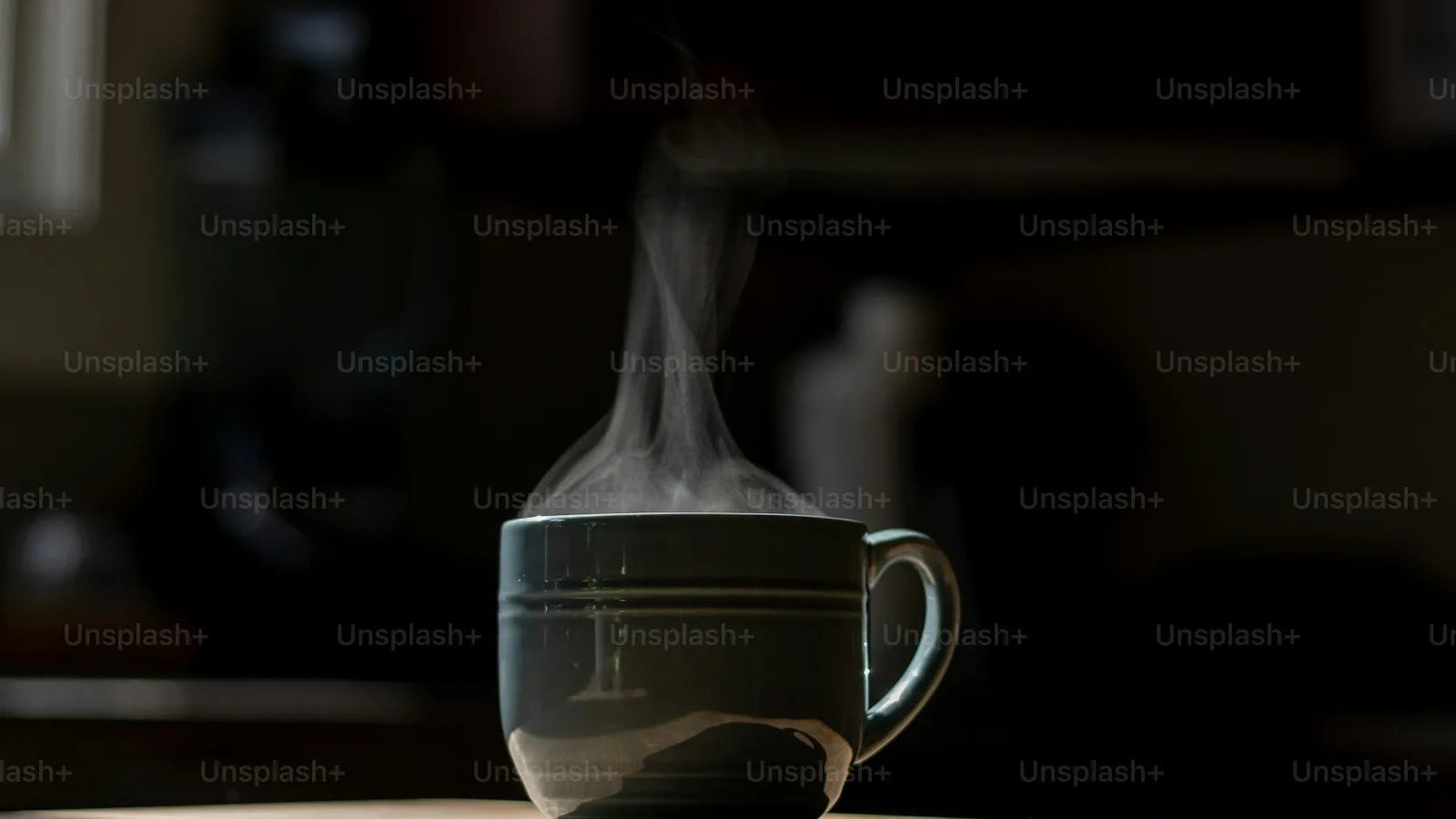
Mushroom coffee is one of the fastest-growing categories in the functional beverage space, and also one of the most inconsistently formulated. The category has a legitimate scientific foundation: specific mushroom extracts, particularly Lion's Mane and Chaga, have real research behind them with effects that pair sensibly with caffeine. The problem is that the marketing built around those compounds has outpaced the honesty in many of the products using them.
The most important question to ask about any mushroom coffee is one that most marketing will do its best to prevent you from asking: is this a fruiting body extract, or mycelium grown on grain?
The answer to that question separates a product with real bioactive content from what is, functionally, coffee with a story.
The mycelium-on-grain problem
Mushrooms have a lifecycle with two distinct phases. The mycelium is the root-like network of fungal threads, the part that grows through substrate material (wood, soil, or grain) before the fruiting body forms. The fruiting body is the visible above-ground mushroom, the part people have eaten and used in traditional medicine for centuries.
In the commercial supplement space, most of the research on medicinal mushrooms, including Lion's Mane and Chaga, used fruiting body extracts. The bioactive compounds that show effects in human trials, hericenones in Lion's Mane fruiting body and specific beta-glucans in Chaga, are concentrated in the fruiting body. The mycelium contains some bioactive content but significantly less of the relevant compounds.
Mycelium-on-grain, the form used by most mass-market mushroom supplement brands, is mycelium grown on a grain substrate (typically rice or oats) and then dried. The resulting powder is mostly grain starch with some mycelium content. When analyzed, a significant portion of the total weight is carbohydrates from the grain carrier, not mushroom compound.
This matters enormously for the functional coffee context. A product with 500 mg of mycelium-on-grain powder per serving may be delivering 20 to 50 mg of actual mushroom bioactives alongside a much larger amount of grain starch. A product with 500 mg of fruiting body extract is delivering something meaningfully different.
The label usually doesn't distinguish clearly. "Organic Lion's Mane mushroom" could mean fruiting body extract or mycelium-on-grain. The words "full spectrum" often indicate a mycelium blend. The giveaway is the starch content: if the beta-glucan percentage is disclosed and it's low (under 10 percent), the product is likely mycelium-on-grain. If the label specifies "fruiting body extract" explicitly, the brand is making a clear, verifiable claim.
What Lion's Mane actually does at a real dose
The cognitive evidence for Lion's Mane is covered in the Lion's Mane research post. The practical summary for the mushroom coffee context: fruiting body extract at 1 to 3 grams daily, taken consistently for at least eight weeks, showed modest but measurable cognitive improvements in clinical trials. The effect accumulates slowly and is most pronounced in older adults and people under cognitive stress. There is no acute effect from a single dose.
What this means for mushroom coffee: the Lion's Mane in a daily functional coffee is contributing to a daily dose that compounds over weeks toward the research-relevant range. One cup with 500 mg of fruiting body extract, taken daily for three months, delivers a cumulative dose that overlaps meaningfully with what the trials used. One cup with 200 mg of mycelium-on-grain, taken irregularly, does not.
The dose per serving matters. A label that lists Lion's Mane at 100 to 200 mg per serving means reaching the research-relevant daily dose (1,000 mg and above) would require five to ten cups. A label showing 500 to 1,000 mg of fruiting body extract per serving makes the daily cup a meaningful contribution toward the studied dose range.
What Chaga actually does
Chaga grows primarily on birch trees in cold northern climates and has been used in traditional Siberian medicine for centuries. The modern research picture is less developed than for Lion's Mane, but what exists is consistently positive in the areas the compound actually affects.
Chaga's primary bioactive contribution is its antioxidant and beta-glucan profile. It has one of the highest ORAC values (a measure of antioxidant capacity) of any food or fungus, driven by betulinic acid derivatives and melanin compounds. The beta-glucans it contains have immune-modulating effects consistent with other medicinal mushrooms.
The claims made about Chaga that go further than this, including the cancer-prevention and dramatic immune-boosting language that appears in some marketing, are not supported by current human evidence and should be ignored. What can be said is that a daily dose of Chaga fruiting body extract contributes a meaningful polyphenol and beta-glucan load as part of a broader wellness routine.
In functional coffee, Chaga's role is primarily antioxidant and immune-support background work while Lion's Mane does the cognitive support. It's not the reason to switch from regular coffee, but it's a real and meaningful addition to a formula that already has a cognitive rationale.
Why the coffee quality matters too
A mushroom coffee is still, primarily, a coffee. The quality of the underlying coffee determines about 80 percent of the daily experience, and a poor-quality base undermines both the functional claims and the ritual that makes a morning coffee habit worth keeping.
What to look for in the coffee component: Arabica rather than Robusta (Arabica has a more complex flavor profile and lower bitterness), a roast level that's specified (medium roast preserves more of the nuanced flavor compounds while maintaining the caffeine content that moderate roasting affects relatively little), and an origin that's disclosed (transparency about sourcing is a reasonable proxy for quality attention elsewhere in the product).
A mushroom coffee that uses a quality Arabica base delivers a genuinely better morning beverage than regular coffee plus a standalone mushroom supplement. A mushroom coffee that uses low-quality Robusta padded out with flavor masking is more expensive than a capsule supplement taken alongside your regular coffee.
Reading the label: the three questions
Three questions answer most of what you need to know about a mushroom coffee product.
Does the label specify "fruiting body extract"? If yes, and if it names the extraction ratio or beta-glucan percentage, the brand is making a verifiable claim about meaningful bioactive content. If the label says "mushroom blend," "full spectrum," or just "organic Lion's Mane mushroom" without the fruiting body specification, the content is likely mycelium-on-grain.
What is the milligram amount per serving? For Lion's Mane specifically, a serving with under 300 mg of fruiting body extract is contributing a small fraction of the research-relevant daily dose. A serving at 500 mg or above starts to make the daily cup a meaningful part of the cognitive support routine. The Lion's Mane dosage post covers the form and dose question in detail.
Is the coffee component quality? Medium roast Arabica from a disclosed origin is a reasonable baseline. Anything without a specified roast level or coffee type is a signal that the brand cares more about the functional claim than the product itself.
KAEVO Morning Focus is a medium roast Arabica coffee with Lion's Mane and Chaga fruiting body extracts, dosed at a range that contributes meaningfully toward the research-relevant daily total. The Morning Clarity bundle adds KAEVO Clarity (the standalone fruiting body extract capsule) so the daily total reaches the higher end of the research range consistently. The mushroom coffee benefits post covers the caffeine-plus-Lion's Mane pairing and why the combination makes sense beyond the marketing.
What mushroom coffee doesn't do
The most common unmet expectation in this category is the acute cognitive effect. Multiple mushroom coffee brands use language that implies the morning cup produces a noticeable sharpness or clarity that regular coffee doesn't. There is no human trial showing an acute cognitive effect from a single mushroom coffee dose that exceeds what caffeine alone produces. The mushroom component is doing slow, structural work over weeks. The acute experience is the caffeine.
Someone switching from regular coffee to a quality mushroom coffee on day one will notice: the same caffeine effect, possibly better flavor, and a higher product cost. The mushroom contribution becomes apparent over weeks, not hours, and tends to show up as a baseline shift rather than a morning sensation. This is not a criticism of the category; it's the honest framing that the category's marketing usually avoids.
Why fruiting body matters in a coffee specifically
The fruiting body versus mycelium-on-grain question matters in any mushroom supplement format, but it carries additional weight in a coffee specifically because of how the brewing process interacts with the extract. Hot water extraction is actually one of the most effective ways to release the beta-glucans and other water-soluble bioactives from mushroom fruiting bodies. Traditional preparation of medicinal mushrooms across multiple cultures involved boiling or steeping in hot water for exactly this reason. The heat and water combination liberates what matters.
This means that a high-quality fruiting body extract in a coffee product is well-served by its format. When the coffee is brewed, the hot water acts as a secondary extraction step on top of whatever processing the mushroom extract already underwent. The bioactives that are present and water-soluble get a favorable delivery vehicle. The concern sometimes raised about heat degrading mushroom bioactives applies to certain delicate compounds, but the primary therapeutic compounds in Lion's Mane and Chaga, hericenones, beta-glucans, and betulinic acid derivatives, are heat-stable enough to survive normal brewing temperatures.
Mycelium-on-grain does not benefit from this in the same way, because the limiting factor isn't extraction efficiency. It's that the relevant bioactives were present in lower concentrations to begin with. Brewing hot water through grain starch efficiently extracts grain starch. The trace mushroom content that was present in the mycelium-on-grain powder comes along, but the total bioactive dose remains low regardless of how well the brewing works.
The daily dose question becomes important when someone is combining a mushroom coffee with a standalone capsule supplement. If the morning coffee delivers 500 mg of fruiting body extract and the capsule delivers another 1,000 mg, the total daily intake is 1,500 mg, which sits in the lower-middle of the research-relevant range for Lion's Mane. If the coffee delivers 250 mg of mycelium-on-grain (with perhaps 25 to 50 mg of actual bioactives) and the capsule delivers 1,000 mg of fruiting body extract, the capsule is doing nearly all of the therapeutic work and the coffee is a pleasant but minimal addition.
The practical implication: if you are combining a mushroom coffee with a capsule supplement, use the capsule's fruiting body content to anchor your daily dose calculation, and treat the coffee as a contribution only if it specifies fruiting body extract and a meaningful milligram amount per serving. A coffee that contributes 500 mg or more of verified fruiting body extract alongside a daily capsule gives you a total that reaches or exceeds the research-used range without requiring additional capsules.
One more variable worth considering: the roast temperature and brew method do affect how bioactives are extracted, but within the normal range of home brewing methods (drip, pour-over, French press, espresso), the differences are not dramatic enough to require changing how you make your coffee. The more consequential variable remains what was in the extract before it went into the bag.
The short version
The most important question about any mushroom coffee is whether the mushroom content is fruiting body extract or mycelium-on-grain. The former has the bioactive compounds the research used; the latter is mostly grain starch with a mushroom story on the label. After confirming fruiting body extract, check the milligram amount per serving (500 mg and above of Lion's Mane starts to matter) and the quality of the underlying coffee. The formula works over weeks of daily use, not in a single cup. The acute effect is the caffeine; the mushrooms are doing background work that compounds over time. The version worth buying is transparent about what's in it.