April 22, 2026 · KAEVO
How to fall asleep faster: what actually works, ranked
Some sleep onset techniques are well-evidenced. Most are folklore. Here's what the research supports for falling asleep faster, and the order to try things in.
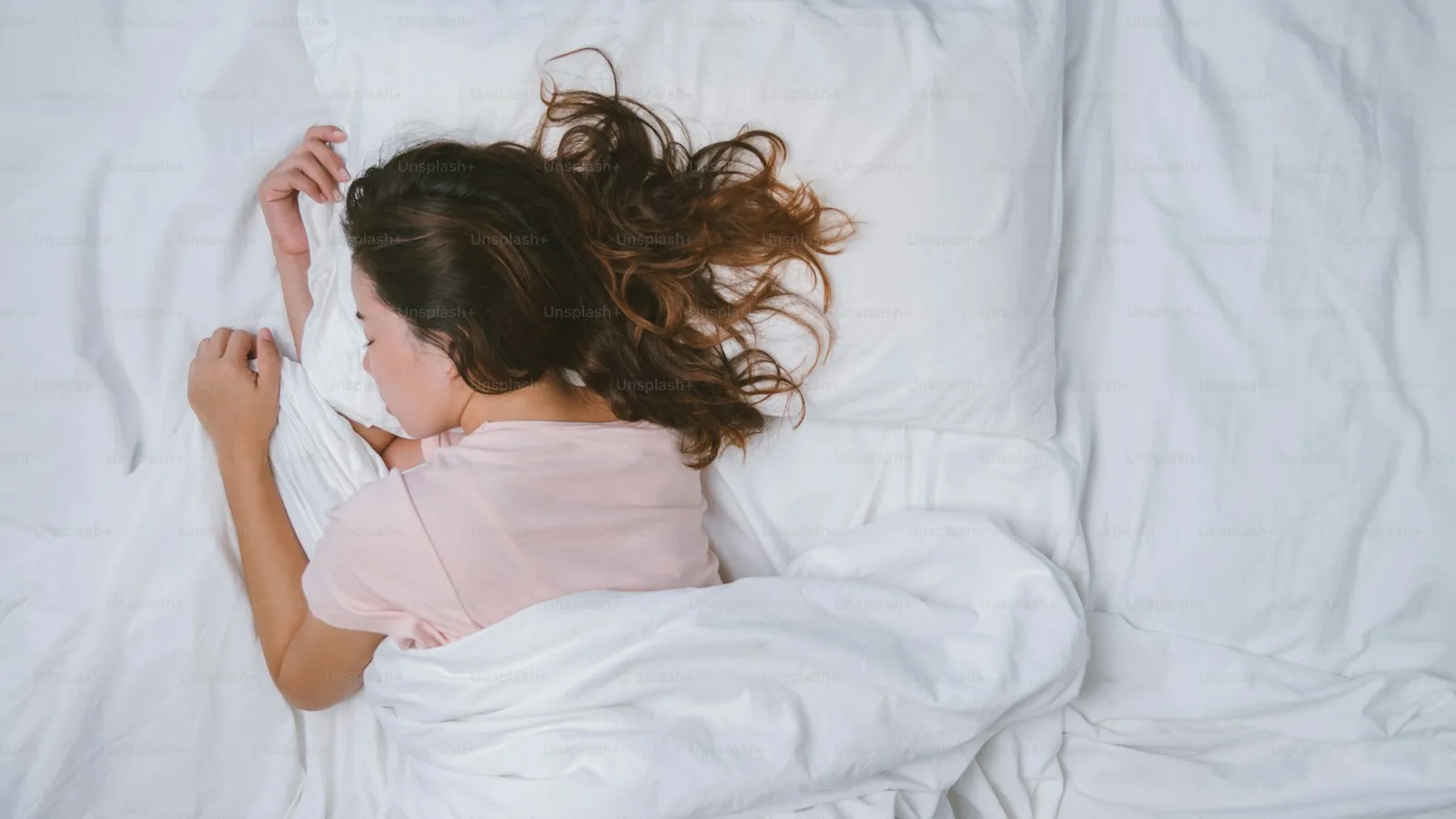
The advice for falling asleep faster is one of the most crowded corners of wellness content, and most of it is either unreliable folklore or takes the real science and misapplies it. Counting sheep, drinking warm milk, taking melatonin at a high dose, downloading a sleep app, buying a weighted blanket: some of these do something, some do nothing, and most of the ones that work do so through a mechanism that the usual framing doesn't explain well.
The honest picture is that falling asleep faster is mostly about removing the conditions that prevent sleep onset, not about adding a new behavior that induces it. The brain wants to sleep. The default in a dark, quiet, appropriately cool room with no caffeine active and no cortisol spike in the last two hours is sleep. The job of a sleep onset routine is mostly obstacle removal, not sleep induction.
Here's what the evidence supports, ranked by impact.
Lower the room temperature
The body needs to drop its core temperature by approximately 1 to 1.5 degrees Celsius for sleep onset to happen cleanly. This isn't an optional step; it's a physiological requirement for the transition into sleep. The body achieves it through peripheral vasodilation, releasing heat through the hands and feet, which is why they often feel warm right before falling asleep.
A room that's too warm slows this process significantly. Research on bedroom temperature and sleep onset is consistent: a room between 16 and 19 degrees Celsius (60 to 67 Fahrenheit) produces faster sleep onset and better sleep architecture than a warmer room. Most people keep their bedrooms several degrees warmer than this.
The shortcut is a warm shower or bath 60 to 90 minutes before bed. The warm water accelerates peripheral vasodilation, which speeds the core temperature drop that follows. Studies have shown that this produces measurably faster sleep onset without changing the bedroom temperature. It sounds counterintuitive (warm bath before sleep?) but the mechanism is straightforward: you're triggering the cooling process, not heating the body toward sleep.
Remove blue-spectrum light earlier
The single most widely applicable behavioral change for sleep onset is reducing bright, blue-spectrum light exposure in the 60 to 90 minutes before bed. This is covered in detail in the evening wind-down routine post. The short version: phone screens, laptops, and bright overhead LED lighting suppress melatonin production at precisely the time when the body should be ramping it up. Two hours of evening screen exposure at full brightness has been shown to delay melatonin onset by up to 90 minutes.
Dim the room and shift to warm-toned light sources after dinner. Drop phone brightness to minimum. Use night mode settings. In the final 20 to 30 minutes, avoid screens entirely if possible. The melatonin production that these changes allow to proceed normally does more for sleep onset than any supplement can compensate for if the light environment isn't managed.
Amber-tinted glasses that block blue wavelengths are a useful tool when screen use is unavoidable in the evening. The evidence base for their effectiveness is reasonable: they reduce the melatonin-suppression effect of screen light and produce earlier sleep onset in people who use them consistently.
Establish a consistent wind-down signal
The nervous system learns to associate specific conditions with sleep through repetition. A consistent pre-sleep routine (the same sequence of activities in the same order at roughly the same time) trains the brain to begin the downshift process when the cues arrive. This is not magic; it's classical conditioning applied to sleep onset.
The routine doesn't need to be elaborate. Ten to fifteen minutes of a consistent sequence is enough to establish the association after two to three weeks of repetition. The elements that work best are low-stimulus: reading physical text, gentle stretching, journaling, or calm conversation. The elements that work worst are high-stimulus: news, social media, emotionally engaging television, or work tasks that require decisions.
The goal is a reliable signal that tells the nervous system "this pattern precedes sleep." Once established, the onset of the routine produces a measurable shift in arousal state that makes falling asleep noticeably easier.
L-theanine in the wind-down window
L-theanine, the calming amino acid found naturally in green tea, has the clearest evidence for sleep onset of any non-sedating supplement. At doses around 200 mg, taken 30 to 45 minutes before bed, it produces a shift toward alpha brain wave activity (the relaxed-wakefulness pattern associated with meditation and the moments just before sleep) without sedating.
The subjective effect is a quieting of the mental running commentary that often keeps people awake after lights out. The experience isn't drowsiness; it's a reduction in the sense of mental activation that makes lying in a dark room feel more stimulating than restful.
Multiple small trials have shown improvements in sleep onset latency (the time to fall asleep) and subjective sleep quality with L-theanine. The evidence is consistent if not large-scale. It works best for the "tired but wired" pattern where fatigue is present but the nervous system isn't switching off, and it combines well with magnesium glycinate (different mechanism, additive direction).
Magnesium glycinate in the evening
Magnesium glycinate addresses sleep onset partly through NMDA receptor regulation (which reduces evening neuronal excitability) and partly through HPA axis support (which helps cortisol taper as it should in the late evening). The effect on sleep onset isn't immediate on day one; it builds over two to four weeks of consistent nightly use.
For someone whose difficulty falling asleep has a stress and cortisol component (the classic lying-awake-thinking-about-tomorrow pattern), magnesium glycinate's effect on the arousal system is directionally useful. For someone whose sleep onset problem is purely light and caffeine related, the magnesium effect is smaller because the root cause is different.
The dose is 200 to 400 mg elemental, taken 45 to 60 minutes before bed. See the magnesium glycinate for sleep post for the full mechanism and dose detail.
Low-dose melatonin (used correctly)
Melatonin is the most commonly used sleep supplement and the most commonly used incorrectly. The typical retail dose in the US market is 5 to 10 mg. The dose that the research shows is effective for sleep onset is 0.5 to 1 mg. High doses don't produce a stronger effect; they produce a longer-lasting sedative hangover effect the following morning and, over time, can suppress the body's own melatonin production.
Low-dose melatonin (0.5 to 1 mg) taken 30 to 60 minutes before target sleep time works primarily as a circadian signal, not a sedative. It tells the brain "this is the darkness period" and nudges the biological clock toward sleep readiness. It's particularly effective for circadian timing problems (delayed sleep phase, jet lag, irregular schedules) and less effective for stress-driven sleep onset difficulty where the clock timing is fine but the arousal system is too active.
Used at the right dose and for the right pattern, melatonin is genuinely useful. Used at 10 mg as a "stronger" sleep aid, it's overshooting the mechanism and adding morning grogginess without proportional benefit.
The role of sleep pressure
Sleep pressure, also called homeostatic sleep drive, is the biological mechanism that makes you feel progressively sleeper the longer you've been awake. It's driven by the accumulation of adenosine, a byproduct of cellular energy use that builds up in the brain throughout the day. When adenosine reaches a sufficient level, the drive to sleep becomes strong enough to initiate it. This is the mechanism caffeine works against: it blocks adenosine receptors so you don't feel the drive, but the adenosine keeps accumulating.
Understanding sleep pressure matters for falling asleep faster because the most common thing people do that undermines it is napping late in the day or spending excessive time in bed. A long afternoon nap partially discharges the sleep pressure that should be fully available at bedtime. Spending time in bed in the morning beyond natural wake time also does this, clearing some of the drive that would have made sleep onset faster the following night.
For people with persistent sleep onset difficulty, sleep restriction (deliberately limiting the time in bed to create strong sleep pressure) is one of the most effective short-term interventions in the CBT-I toolkit. It works by ensuring that by the time the person goes to bed, the adenosine accumulation is high enough to produce sleep onset within 20 minutes. After a few nights of this, sleep efficiency improves and the window in bed can be extended. It's uncomfortable for the first week and works very well for the following month.
The practical application for most people without clinical guidance is simpler: don't nap after 2 p.m., get out of bed at a consistent time even after a bad night, and avoid lying in bed awake for extended periods (which weakens the bed-sleep association and clears sleep pressure). These three practices protect the natural sleep pressure that makes falling asleep faster much easier.
What doesn't work
A few things with significant cultural presence and minimal sleep-onset evidence are worth naming.
Counting sheep. Studies have actually tested this and found it neither helps nor harms sleep onset compared to not counting anything. The original hypothesis was that monotonous mental activity would displace anxious thoughts; the research found that it's not engaging enough to occupy the mind meaningfully.
Progressive muscle relaxation and body scan techniques. These have some evidence for reducing subjective sleep anxiety, and they do promote parasympathetic nervous system activity. The effect on objective sleep onset time is smaller than their cultural prominence suggests, but they're not harmful and some people find them useful for the specific problem of physical tension at bedtime.
High-dose vitamin or herbal combination products. Most of the "sleep blend" supplement category combines ingredients at sub-therapeutic doses behind a proprietary blend label. Individual ingredients like valerian root, passionflower, and GABA have limited or inconsistent human evidence for sleep onset at practically available doses.
Putting it together in order
The most efficient sequence for someone with sleep onset difficulty:
Establish a consistent wake time first (this anchors the circadian clock before anything else). Move the caffeine cutoff to early afternoon. Dim the room and manage light in the 60 to 90 minutes before bed. Add a 10 to 15 minute consistent wind-down routine. Once those are in place, add L-theanine and/or magnesium glycinate if residual difficulty remains.
KAEVO Unwind covers the magnesium glycinate component at the research-backed evening dose. The Night Reset bundle pairs Unwind with KAEVO Night for nights requiring additional support.
The short version
One thing worth noting about the ranked list above: the interventions are not mutually exclusive, and addressing more than one simultaneously is both safe and often more effective than addressing them in strict sequence. Managing light, cooling the room, and adding L-theanine all work through different mechanisms and their effects are additive. The sequence matters most for diagnosis (knowing which one helped tells you which mechanism was operating) but not for implementation if you already have a clear picture of the causes.
Falling asleep faster is mostly about removing obstacles to the sleep that wants to happen rather than forcing sleep through intervention. The biggest levers are room temperature (cooler than most people keep it), light management (blue-spectrum reduction in the final hour), a consistent wind-down signal, and caffeine timing. L-theanine helps with the "tired but wired" pattern specifically. Magnesium glycinate addresses the cortisol and arousal piece over two to four weeks. Low-dose melatonin at 0.5 to 1 mg works for timing problems. The sequence matters: fix the behavioral inputs first, then add supplements to close the remaining gaps.